Emergency Plumbing Risks in 1970s-1980s Aurora Homes
Aurora homes built in the 1970s and 1980s face unique plumbing emergencies. Learn the most common failures and how to prevent them.

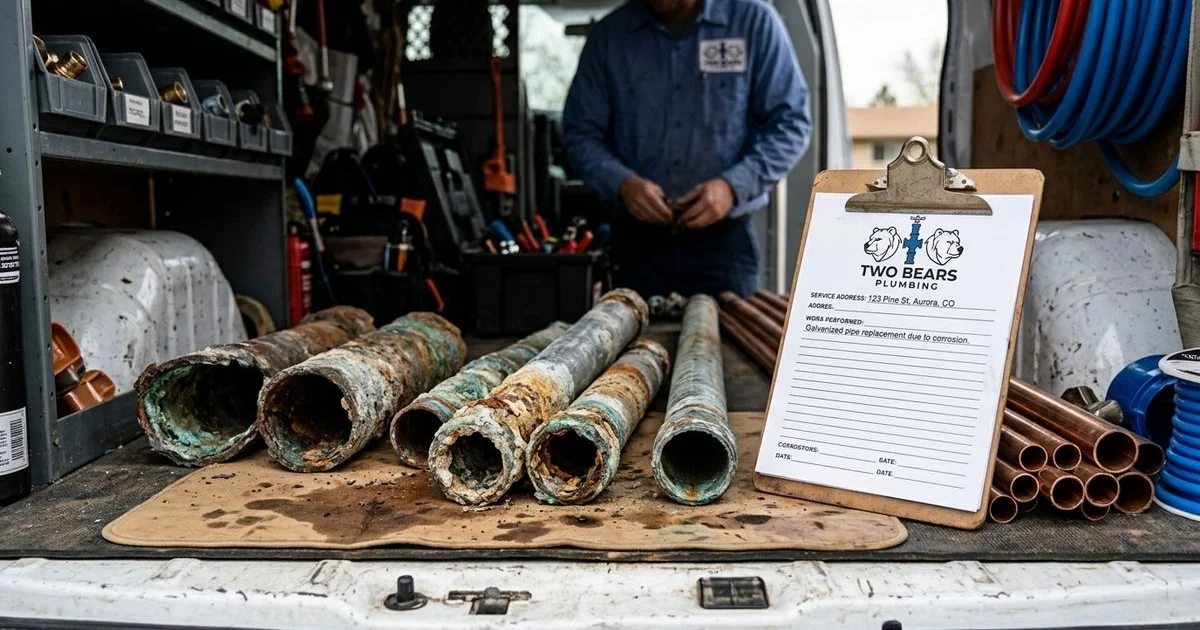
You probably know that Aurora saw a massive building boom in the 1970s and 1980s. Thousands of houses went up rapidly across neighborhoods like Hoffman Heights, Del Mar Parkway, Sable Ridge, and the original Aurora Hills area. Those homes are now 40 to 50 years old.
Our team at Two Bears Plumbing has seen a sharp increase in emergency calls from these specific areas. The failures follow predictable patterns based on the materials and building practices of that era.
Understanding the emergency plumbing risks in 1970s-1980s Aurora homes can save you thousands of dollars in sudden repair costs. Let’s examine the actual materials failing behind your walls. I will walk through the data and provide practical ways to protect your property and your budget.
Evaluating Emergency Plumbing Risks in 1970s-1980s Aurora Homes
Galvanized Steel Supply Lines
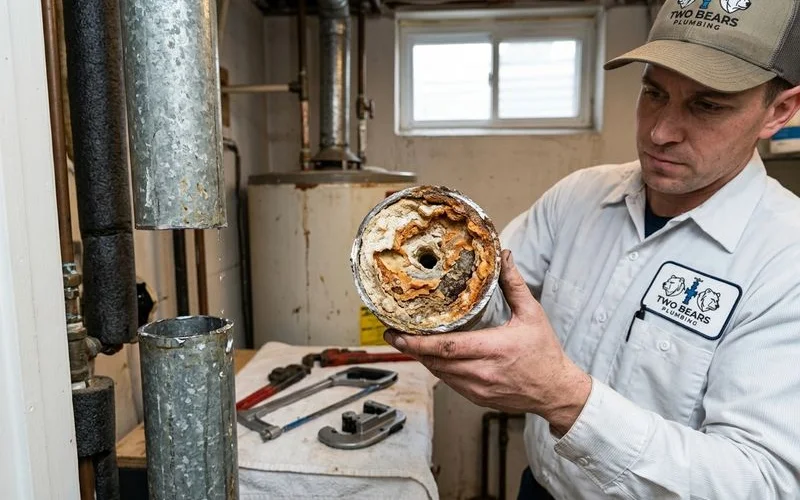
Homes built before the mid-1970s in Aurora often contain galvanized steel water supply lines. These pipes were extremely strong when builders installed them. They unfortunately corrode from the inside out over the decades.
Our service records show Aurora’s moderately hard water, averaging 5 to 8 grains per gallon, accelerates this rusting process dramatically. The result is a gradual narrowing of the pipe interior.
You might notice reduced water pressure at first. Rusty or discolored water usually follows a few months later. Pinhole leaks eventually develop at fittings or joints, causing substantial water damage inside your walls.
Polybutylene (Poly-B) Pipes
Builders plumbed many Aurora homes between 1978 and 1995 with polybutylene. This gray, flexible plastic pipe was heavily marketed as a cheap, futuristic alternative to copper.
We now know chlorine in municipal water reacts fatally with polybutylene over time. The material becomes brittle and flakes apart from the inside. A massive $1 billion class action settlement in 1995 confirmed these catastrophic failure rates across the country.
Polybutylene failures are entirely unpredictable. A pipe looking perfectly fine on the outside will suddenly rupture without warning.
Check for gray plastic pipes with copper or plastic crimp rings near your water heater. You should plan for a replacement if you spot them.
Pro Tip: Do not wait for a poly-B pipe to burst. Insurance companies frequently drop coverage or deny damage claims if they discover existing polybutylene lines in a flooded home.
Cast Iron Drain Lines
The drain, waste, and vent systems in many 1970s Aurora homes rely on heavy cast iron pipes. Cast iron offers great soundproofing and initial durability. It still eventually falls victim to constant internal moisture.
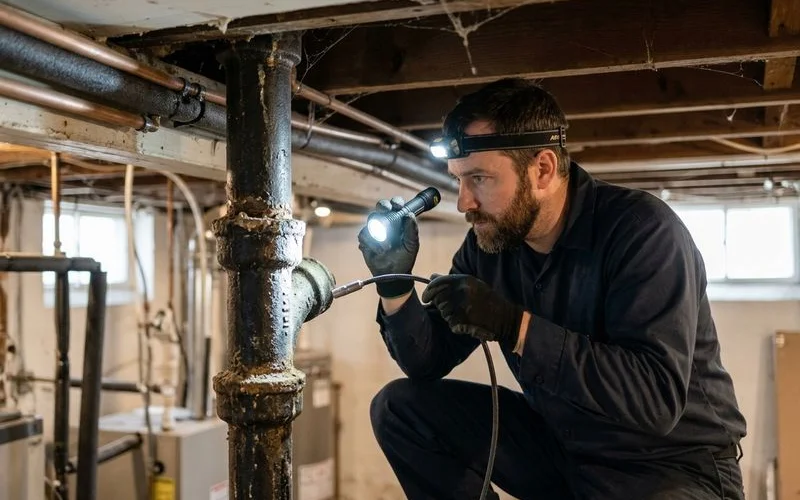
Our plumbers frequently find severe corrosion on the horizontal pipe runs under basement slabs and in crawl spaces. Cast iron develops a specific issue called channeling after 40 to 50 years. The bottom of the pipe literally rots away, leaving a jagged open trench.
A failed cast iron drain line will leak raw sewage straight into your basement or crawl space. This creates an immediate health hazard and an expensive soil cleanup project.
Clay Sewer Lines
The main line connecting your home to the city sewer in older Aurora neighborhoods is usually made of vitrified clay. Clay is highly rigid and exceptionally brittle.
We see ground settling, soil movement, and aggressive tree roots easily break these older pipes. Mature trees native to Colorado, like Cottonwoods and Silver Maples, actively seek out the moisture seeping from old clay joints.
A collapsed clay line represents one of the most expensive property repairs you can face. Replacements often cost between $5,000 and $15,000 depending on the length and the amount of excavation required.
You can learn more about our drain and sewer services including high-definition camera inspection and modern trenchless repair options.
The Most Common Emergency Failures
Based on our extensive service logs across Aurora’s older neighborhoods, certain emergencies happen more than others. Paying attention to early warning signs keeps repair costs manageable.
| Failure Type | Early Warning Sign | Emergency Risk Level |
|---|---|---|
| Copper Pinhole Leaks | Unexplained damp spots or mold smell | Medium (Slow structural damage) |
| Polybutylene Ruptures | None (Sudden catastrophic failure) | High (Immediate indoor flooding) |
| Clay Sewer Backups | Gurgling toilets or slow drains | High (Property contamination) |
| Slab Leaks | Unexplained spike in water bill | Medium (Foundation damage) |
Here is a deeper look at the specific issues driving our late-night service calls:
- Pinhole leaks in copper supply lines: Aurora’s mineral-heavy water causes pitting corrosion in older copper pipes, specifically in hot water lines. These tiny leaks often spray water silently behind drywall for weeks before you notice.
- Water heater failures: Original water heaters in 1970s homes are long gone. Replacement units still fail faster here due to hard water sediment buildup. A standard tank water heater in Aurora typically lasts 8 to 10 years, compared to the 12 to 15 year national average.
- Slab leaks: Builders ran copper lines directly under concrete basement slabs in many 1970s and 1980s homes. The water has nowhere to go but straight up through your flooring when these lines corrode.
- Root intrusion backups: Tree roots expand inside clay pipe joints over the years. The blockage forces raw wastewater back up through your lowest shower drain.
Actionable Steps to Protect Your Property Budget
You cannot reverse the aging process of your home plumbing system. You can definitely take smart steps to prevent sudden catastrophic failures.
Our team focuses on proactive solutions that save homeowners money in the long run. Here is a clear checklist to secure your vintage Aurora home:
- Schedule a thorough plumbing inspection. An expert can identify galvanized pipes, polybutylene, and corroding cast iron before they burst. Schedule this immediately if you have not had a professional look at your pipes in the last five years.
- Test and adjust your water pressure. High water pressure above 80 PSI puts immense stress on aging pipe joints. A simple pressure-reducing valve adjustment protects the entire system.
- Have your main sewer line scoped. A camera inspection reveals root intrusion and bellies in your sewer line long before raw sewage backs up into your home.
- Install a whole-house water softener. Softening the municipal water stops aggressive mineral buildup in its tracks. This single upgrade drastically extends the lifespan of your fixtures. Ask about our water heater services for installation and maintenance options.
- Budget for a strategic repipe. A planned replacement of galvanized or polybutylene lines is highly manageable and predictable. Waiting for a series of emergency blowouts over several years will quickly drain your bank account.
Local Expertise You Can Rely On
Two Bears Plumbing has successfully updated hundreds of 1970s and 1980s-era Aurora homes. We know the exact floor plans, the typical building materials, and the hidden spots where problems consistently develop.
Local technicians arrive at your door prepared with the specific parts required for your home’s unique era. Calling us at (720) 740-2481 means getting a permanent fix instead of a temporary patch.
Do not wait for a midnight disaster to discover your pipes are rotting away. You can easily address the emergency plumbing risks in 1970s-1980s Aurora homes right now with a proactive inspection.
Reach out to our local crew any time for emergency plumbing services. We keep operators available 24/7 across Aurora, CO to protect your home.
Need Plumbing Help in Aurora?
Call now for same-day service. Upfront pricing, no hidden fees.
Call (720) 740-2481Related Service: Learn more about our emergency plumbing services →