Signs of Root Intrusion in 1970s Clay Sewer Lines
Tree roots invading your sewer line? Aurora homes with 1970s clay pipes are especially vulnerable. Learn the warning signs and repair options.

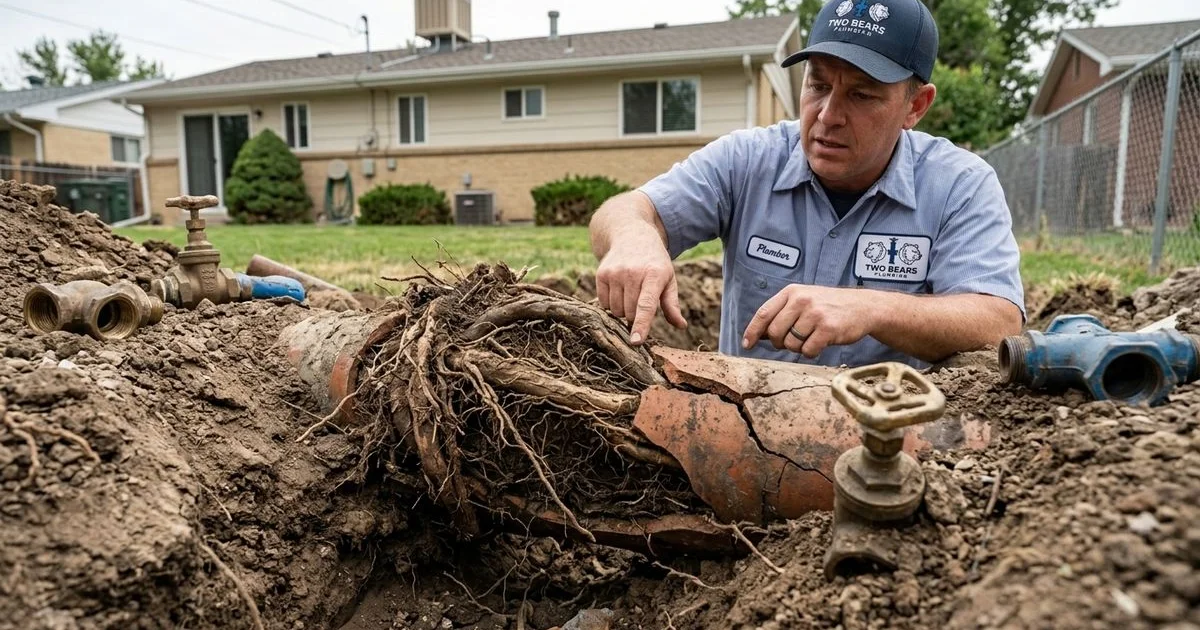
Our team constantly sees how aging infrastructure forces smart homeowners into a reactive panic instead of proactive planning.
Knowing that the typical 1970s vitrified clay pipe has a strict 50-year lifespan changes everything about home maintenance.
Nearly 23% of housing units in Aurora were built during that exact decade, meaning a massive wave of plumbing failures is hitting right now in 2026.
We started Two Bears Plumbing to be the reliable professionals Aurora residents can call when these predictable emergencies finally happen.
These vintage terra cotta lines possess a fatal flaw that native Colorado vegetation actively exploits.
Tree roots hunt for the moisture seeping from failing pipe joints.
Our daily inspections prove that catching the signs of root intrusion in 1970s clay sewer lines early is the only way to avoid catastrophic property damage.
Here is a clear breakdown of why this vulnerability exists and exactly how you can respond effectively.
Why Clay Pipes Are Vulnerable to Root Intrusion
Vitrified clay pipes are installed in short sections, usually two to three feet long, joined together at each connection point.
We know from industry data that vitrified clay pipes have an estimated lifespan of 50 to 60 years.
This means any pipe installed in Aurora during the 1970s is now reaching the end of its functional life in 2026.
The mortar or rubber gaskets at these joints deteriorate over the decades, creating microscopic gaps.
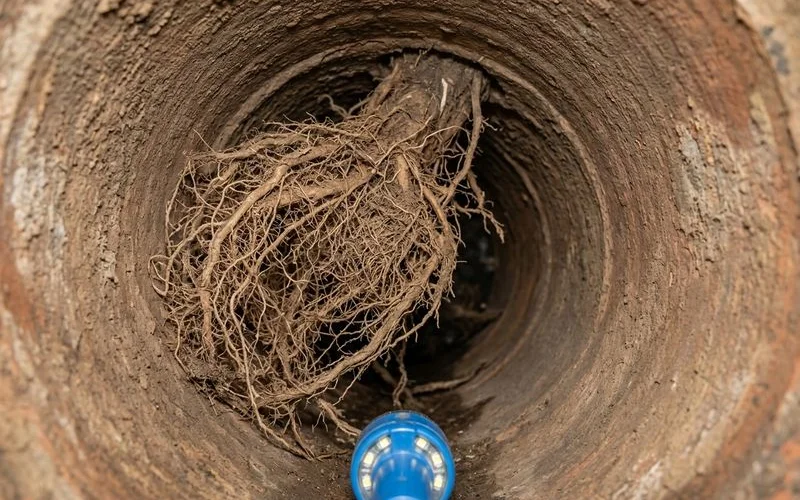
Our technicians frequently find that even a hairline opening is enough for a root tendril to slip inside.
A warm, nutrient-rich environment inside a sewer line provides the ideal habitat for rapid root growth.
A single root tendril can expand into a dense mass that partially or completely blocks the pipe within a few short years.
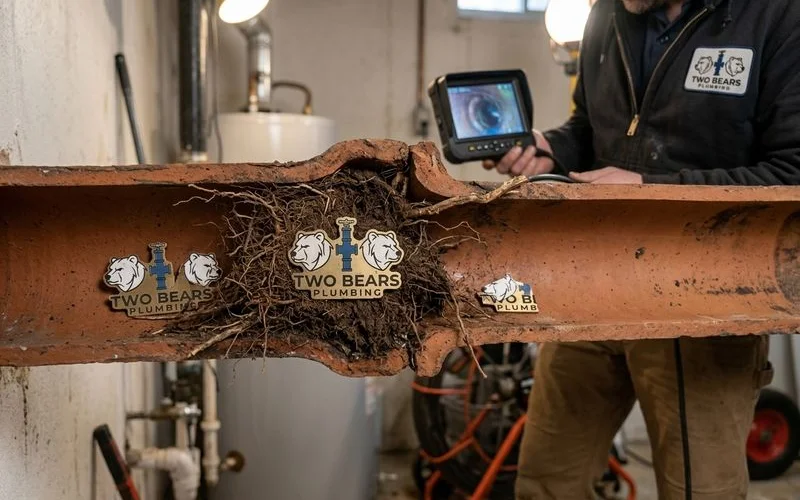
We often pull out massive root balls that have caught grease, paper, and other debris.
Colorado is home to specific thirsty tree species that cause the most damage.
The worst offenders include:
- Narrowleaf Cottonwood (feeder roots extend up to 50 feet)
- Plains Cottonwood (massive root systems seeking deep moisture)
- Silver Maple (fast-growing surface roots that crush old clay)
Our local geography means a tree in your front yard can easily reach a sewer line buried near the street.
Property owners often underestimate the destructive power of these native trees.
Planting thirsty trees too close to the sewer lateral is a common landscaping mistake.
The Warning Signs of Root Intrusion
We always tell clients that root intrusion does not happen overnight.
Symptoms usually develop gradually over several months.
Watch for these specific indicators in your home.
Our emergency dispatchers hear these exact complaints daily.
Slow Drains Throughout the House
A single slow drain usually points to a localized clog in one specific pipe.
Multiple sluggish drains across the house indicate a blockage in the main sewer line.
We consider this a major red flag if the toilet, bathtub, and basement floor drain are all affected at once.
Standard water flow is roughly two gallons per minute, so any noticeable delay requires attention.
Root intrusion remains the most frequent culprit for this system-wide slowdown.
Gurgling Sounds from Drains
Our plumbers refer to drain gurgling as the sound of a struggling plumbing system.
Roots partially blocking the line trap air inside the pipe.
This trapped air gets displaced as wastewater tries to pass the obstruction.
We urge you to take action if you hear bubbling noises from the toilet after running the bathroom sink.
Hearing gurgling when another fixture drains means the pipe venting is compromised.
Do not ignore this early auditory warning.
Frequent Backups
Our data shows that a sewer line backing up more than once a year signals a severe underlying defect.
Snaking the line might clear the immediate blockage for a few weeks.
The roots will grow back thicker within months if you only punch a hole through the mass.
We have seen repeated backups cause thousands of dollars in water damage restoration costs.
Raw sewage backing up into a basement is a biohazard that requires professional mitigation.
Repeated issues are a strong indicator that roots have firmly established themselves inside the clay pipe.
Patches of Extra Green Grass
Our technicians always check the front yard for unexplained strips of lush, green grass.
Escaping sewage acts as a highly concentrated nitrogen fertilizer.
A specific patch of yard that grows taller or greener than the surrounding lawn often points to a pipe leak below.
We find this visible growth difference especially noticeable during the dry Colorado summer months.
A healthy-looking strip of grass might actually be masking a failing underground pipe.
Pay close attention to the area directly above your sewer lateral.
Sinkholes or Settling in the Yard
Our team treats yard depressions as a serious structural emergency.
Roots can crack the clay pipe wide enough for surrounding soil to wash inside.
This constant soil erosion creates soft spots or noticeable settling in the ground above the line.
We warn homeowners that a visible sinkhole means the pipe has likely suffered a partial collapse.
Waiting to fix a collapsed line will only increase the final excavation costs.
Immediate action prevents the sinkhole from expanding toward your driveway or foundation.
Sewage Odor in the Yard or Basement
Our first diagnostic tool is often just smelling the air near the property cleanout.
A healthy sewer line keeps hydrogen sulfide gas safely contained and vented through the roof.
Smelling raw sewage outside your home or in the basement means the pipe integrity is completely gone.
We know that roots can break the joints apart wide enough to release these hazardous gases.
Breathing in concentrated sewer gas poses a health risk to your family.
You must schedule an inspection immediately upon noticing this foul odor.
How We Diagnose Root Intrusion
Our primary diagnostic method relies on high-resolution sewer camera inspections.
Guesswork has no place in modern plumbing repairs.
A technician feeds a waterproof camera on a flexible cable through the line via the cleanout.
We use equipment like the RIDGID SeeSnake to provide real-time video of the pipe interior.
The camera feed shows the exact entry points of the roots and the overall structural integrity of the clay.
This visual evidence allows for accurate identification of pipe bellies, offset joints, and major cracks.
| Diagnostic Method | Average Cost | Typical Outcome |
|---|---|---|
| Sewer Camera Inspection | $150 - $300 | Pinpoints exact root entry points and pipe condition. |
| Blind Snaking | $200 - $400+ | Temporarily pokes a hole without identifying the real issue. |
Our inspection process usually takes less than an hour.
This small investment prevents wasting money on repeated blind snaking.
Seeing the blockage with your own eyes helps you make an informed repair decision.
Repair Options for Root-Damaged Clay Sewer Lines
We recommend specific repair approaches based on the extent of the underground damage.
A clear camera inspection provides the exact data needed to choose the correct path forward.
The three most common solutions for Aurora properties vary in cost and longevity.
Our goal is always to match the right repair method to your specific budget and pipe condition.
Hydro Jetting for Minor Intrusion
A pipe that is still structurally sound can often be cleared using hydro jetting.
High-pressure water running at 4,000 PSI scours the inside of the clay walls.
We use this extreme water pressure to slice through the root mass and wash away grease buildup.
This cleaning method serves as a temporary maintenance solution rather than a permanent fix.
The roots will eventually find their way back through the existing joint gaps.
Our maintenance plans use annual jetting to buy you years of reliable service before a full replacement is required.
Regular cleaning is highly cost-effective if the pipe has not collapsed.
Consistent flow prevents unexpected emergency backups.
Trenchless Pipe Lining (CIPP)
We suggest trenchless pipe lining, also known as cured-in-place pipe (CIPP), for moderate root damage.
An epoxy-coated liner is pulled through the existing line and inflated.
This process creates a smooth, joint-free seal inside the old clay pipe shell.
Our installers can extend the functional life of your sewer by 50 years using this method.
The seamless epoxy completely eliminates the small gaps that roots exploit.
You can review more details by reading about trenchless vs traditional repair options.
Full Sewer Line Replacement
We must recommend a full line replacement when the clay pipe has suffered a total collapse.
Severely offset joints or extensive root damage across the entire length leave no other safe option.
Modern high-density polyethylene (HDPE) or PVC pipe materials provide a massive upgrade over vintage clay.
Our replacement crews install these new, joint-free runs to be highly root-resistant.
These modern plastics are designed to last over 100 years underground.
You can explore the sewer line replacement cost guide for detailed pricing on both trenchless pipe bursting and traditional excavation methods.
Prevention for Aurora Homeowners
We strongly believe that proactive maintenance is the smartest investment for any property built in the 1970s.
Replacing a collapsed line in 2026 can cost upwards of $10,000 depending on the yard.
Taking a few preventative steps now will protect your property and your wallet.
Our top recommendations for avoiding a plumbing disaster include:
- Scheduling a camera inspection every two years to catch early root growth.
- Applying a copper sulfate root killer treatment annually to deter intrusion.
- Keeping newly planted trees at least ten to twenty feet away from your sewer lateral.
- Requesting a utility mark-out so you know the exact path of your underground pipes.
A little foresight goes a long way toward maintaining a healthy plumbing system.
Simple landscaping choices dictate the future health of your home infrastructure.
Do Not Ignore the Warning Signs
We have seen too many homeowners ignore a slow drain until it becomes a flooded basement.
Root intrusion inside old terra cotta pipes will only worsen as the native trees continue to grow.
The signs of root intrusion in 1970s clay sewer lines demand immediate professional attention before a partial blockage becomes a total collapse.
Our expert team is ready to help you accurately diagnose the issue with clear, verifiable video evidence.
Call Two Bears Plumbing at (720) 740-2481 to schedule your comprehensive camera inspection today.
Resolving the unique sewer line challenges found in Aurora is exactly what this company does best.
Need Plumbing Help in Aurora?
Call now for same-day service. Upfront pricing, no hidden fees.
Call (720) 740-2481Related Service: Learn more about our sewer line repair replacement →