How to Tell If Your Pipes Are Frozen (And What to Do Next)
No water? Frost on pipes? Here's how to tell if your pipes are frozen and the safe steps to take before calling a plumber in Aurora.

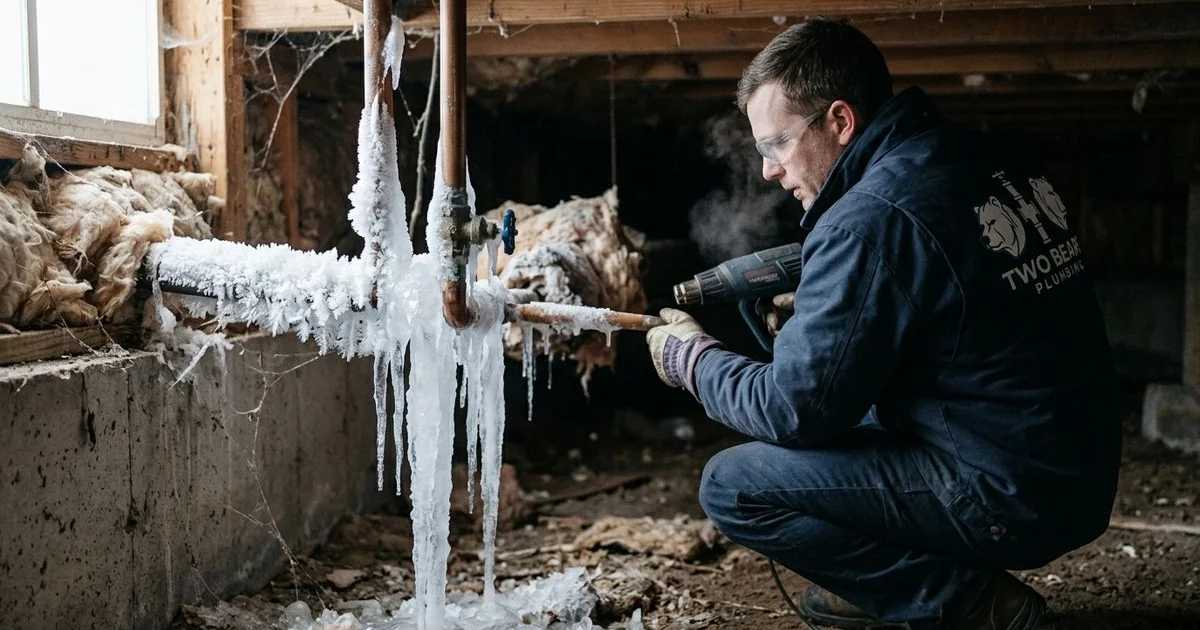
We often hear the exact same story around mid-January here in Aurora.
A homeowner wakes up to a bitterly cold minus 5 degrees, turns on the kitchen faucet, and absolutely nothing comes out. Our team at Two Bears Plumbing handles hundreds of these calls every winter, and we know exactly how quickly that sinking feeling hits you. The reality is that the dividing line between a minor inconvenience and a massive insurance claim often comes down to how fast you react.
We see that 20-degree Fahrenheit mark as the real danger zone for local plumbing systems. When the overnight lows drop that far, your unprotected water lines are already freezing, building pressure that can split copper wide open.
Our goal is to help you answer a critical question: how to tell if your pipes are frozen (and what to do next). Let’s look at the early warning signs, pinpoint where these freeze points hide, and lay out exactly how to thaw them safely.
How to Tell If Your Pipes Are Frozen (And What to Do Next)
We have witnessed exactly how subtle the early signs of a freeze can be. Catching these clues early is your best defense against water damage.
Our technicians look for specific indicators that point to what is happening inside the walls. Spotting these red flags gives you time to react.
No Water or Reduced Flow
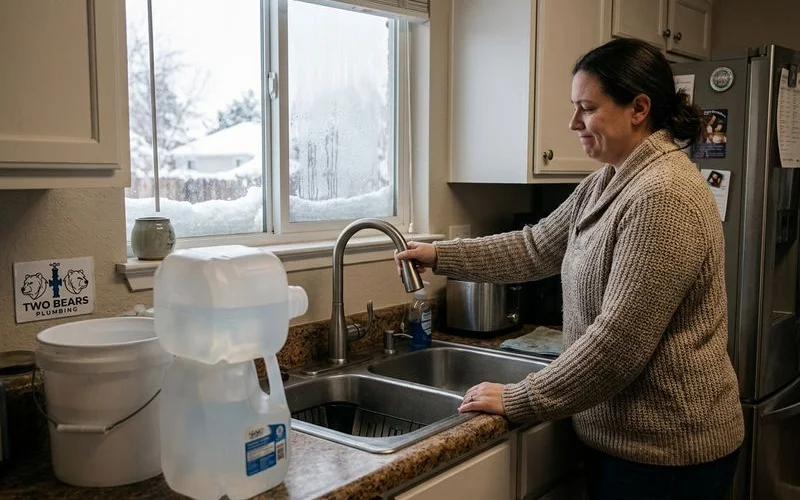
We consider a sudden drop in water pressure to be the most obvious red flag. A standard Aurora home usually runs between 40 and 60 PSI, so a weak trickle from your faucet means an ice blockage is forming.
Our emergency calls usually start because a homeowner noticed just a few drops coming from the bathroom sink. Leaving that trickle running can actually save your pipes, because a steady drip relieves the immense pressure building up behind the ice.
Frost on Exposed Pipes
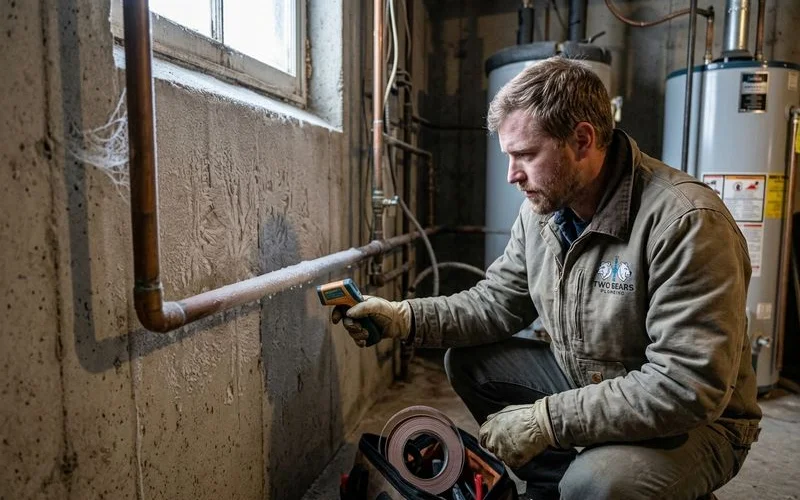
We recommend checking the actual surface temperature of your visible plumbing. A cheap tool like a Klein Tools IR1 infrared thermometer can instantly tell you if the surface is dipping below 32 degrees, even before frost forms.
Our crews use professional thermal imaging, but a simple 20-dollar thermometer works great for a quick basement check. Look for these visual clues:
- White, powdery frost forming on the copper.
- Excessive condensation dripping from the joint.
- A surface reading below 32 degrees Fahrenheit.
We see these symptoms right before a pipe bursts. Condensation freezing into a solid layer clearly indicates a total blockage inside.
Strange Smells from Drains
We often surprise homeowners by asking if their drains smell like rotten eggs. Hydrogen sulfide gas pushing back up through your sink is a strong indicator of a frozen line downstream.
Our drain specialists find that the P-trap, which is the curved pipe under the sink, can freeze solid during severe cold snaps. When that water seal turns to ice and breaks, sewage gases have a direct path right into your living room.
Bulging or Cracked Pipes
We strongly warn against touching a swollen copper or PVC line. Water expands by about nine percent when it freezes, creating a tremendous outward force that causes copper pipes to bulge and eventually split longitudinally along the seam.
Our repair teams have replaced hundreds of shattered PVC lines that exploded from this intense pressure. A swollen pipe is an active emergency waiting to rupture the second it thaws.
| Pipe Material | How It Reacts to Freezing | Visible Warning Sign |
|---|---|---|
| Copper | Expands slightly, then splits longitudinally along the seam. | Swollen, misshapen sections or a hairline split. |
| PVC | Becomes highly brittle under pressure and shatters. | Jagged cracks or completely shattered joints. |
| PEX | Expands significantly to accommodate ice, but fittings may fail. | Bulging lines or water leaking at the connection rings. |
Only Cold Water Works
We occasionally get calls where the hot water side works perfectly, but the cold side is totally dead. This isolated freeze points directly to the cold supply line, helping you narrow down the location fast.
Our experience shows that hot water lines can actually freeze faster under certain conditions due to the Mpemba effect, where heated water loses its dissolved gases and freezes rapidly. Checking both handles gives you a clear map of the problem.
Where Pipes Freeze Most Often in Aurora Homes
We track data on every winter emergency call received. Over the years, clear patterns have emerged regarding which architectural features put your plumbing at the highest risk.
Our findings point to a few specific vulnerabilities in local housing. Pay close attention to these common trouble spots:
- Exterior walls. Pipes running along the north-facing side of the house absorb the most cold.
- Uninsulated crawl spaces. Many Aurora homes built in the 1960s through 1980s feature water lines routed directly through frigid crawl spaces.
- Garages. An unheated garage acts like a freezer.
- Under cabinets on exterior walls. Kitchen and bathroom sink cabinets block warm room air.
- Hose bibs and outdoor faucets. Even frost-free sillcocks will split if a garden hose is left attached.
We strongly suggest evaluating these specific areas before the temperature drops. Adding proper insulation to these zones is incredibly effective.
Our team prefers using closed-cell polyethylene foam, like Tubolit, because it offers an R-value of 1.9 or higher. High-density foam drastically outperforms cheap wrap insulation during a hard freeze.
What to Do If You Think Your Pipes Are Frozen
We want you to act immediately the moment you suspect a freeze. Your fast response is the only thing standing between a simple thaw job and a massive repair bill.
Our recent industry data shows the average cost of a burst pipe water damage claim now easily exceeds 5,000 dollars in the US. Taking immediate action minimizes this financial risk.
- Open the faucet. We always tell customers to open both the hot and cold handles. The blockage itself does not burst the pipe, but rather the trapped water pressure between the ice and the closed faucet causes the rupture.
- Check for visible damage. Our first step on site is a thorough visual inspection for splits or bulges. If the metal is cracked, thawing it will instantly cause a flood.
- Apply gentle heat. We recommend wrapping the accessible section in a VEVOR self-regulating heating cable or applying an electric heating pad. Start warming the pipe from the open faucet side and slowly work your way backward.
- Check other faucets. We advise walking through the entire house to test every single fixture. One frozen line usually means others are freezing nearby.
We are ready to handle the situation if your DIY methods fall short. Call Two Bears Plumbing at (720) 740-2481 if the pipe is inside a wall, you spot a crack, or your thawing attempts yield no water after 30 minutes.
Our licensed professionals offer emergency frozen pipe repair and can respond quickly to stop the damage before it escalates. Emergency service is available day and night to protect your property.
What NOT to Do
We see well-intentioned homeowners make costly mistakes every single January. Panic often leads to terrible decisions that make the situation much worse.
Our goal is to keep you safe and prevent a minor freeze from turning into a structural disaster. Use this checklist of critical mistakes to avoid during a plumbing emergency:
- Do not ignore it. A frozen pipe rarely thaws safely on its own without intervention.
- Do not use a torch or open flame. The intense heat causes rapid thermal shock, which will shatter copper and melt PEX piping instantly.
- Do not pour boiling water on the pipe. This extreme temperature shift causes immediate fracturing.
- Do not leave your home without shutting off the main valve. The shut-off valve is your best friend, so locate it in your basement or utility room before leaving the house.
We cannot stress the fire hazard enough. Using a propane torch on a water line near dry wooden joists starts devastating house fires every single winter across the country.
Our safety standards strictly forbid open flames near residential plumbing. Protect your home by sticking to electrical heating pads and warm air.
Preventing Frozen Pipes
We believe that proactive maintenance is always cheaper than emergency surgery. Spending a Saturday afternoon preparing your home will save you thousands of dollars down the road.
Our top recommendation is to set your thermostat to a minimum of 55 degrees Fahrenheit, even if you are traveling. Consistent ambient heat keeps the inner wall cavities warm enough to prevent ice formation.
We recommend checking out our complete guide on how to winterize your plumbing for step-by-step preparation before the cold hits. Focus on these key preventative measures:
- Installing high R-value Tubolit insulation on exposed lines.
- Keeping sink cabinet doors propped open on freezing nights.
- Disconnecting all garden hoses before November.
Our team is always here to answer your winter prep questions. Taking the time to prepare today ensures your water keeps flowing tomorrow.
Conclusion
We know that dealing with frozen plumbing is incredibly stressful.
If you were wondering how to tell if your pipes are frozen (and what to do next), we hope this guide gave you clear direction.
Our technicians are always on standby to fix the problem when the cold weather wins. Call Two Bears Plumbing at (720) 740-2481 right now to get an expert on site.
Need Plumbing Help in Aurora?
Call now for same-day service. Upfront pricing, no hidden fees.
Call (720) 740-2481Related Service: Learn more about our frozen pipe repair →