Can You Thaw Frozen Pipes Yourself, or Should You Call a Pro?
Some frozen pipes can be safely thawed at home. Others need a professional. Learn the difference and avoid costly burst pipes in Aurora.

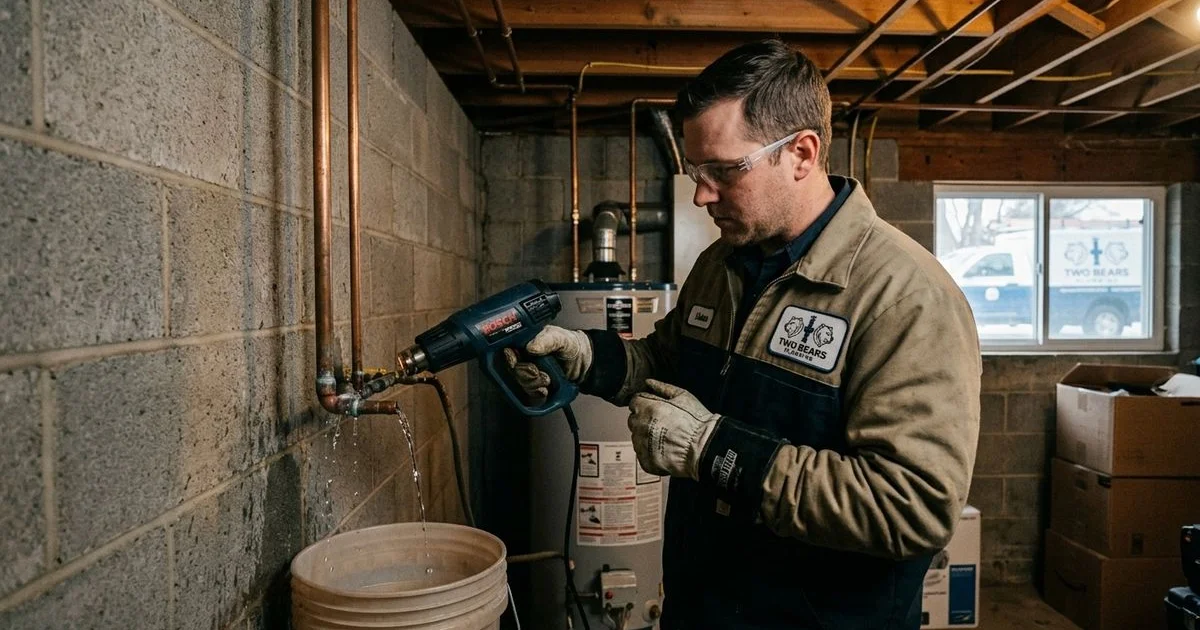
Our team at Two Bears Plumbing knows exactly what goes through your mind when you turn on a faucet during a brutal Aurora cold snap and nothing comes out.
You immediately wonder: can you thaw frozen pipes yourself, or should you call a pro? We see this exact scenario play out constantly across the Front Range when temperatures drop below 20 degrees Fahrenheit.
Recent 2025 insurance data reveals the average payout for home water damage is roughly $14,000 in the US. Our goal is to help you catch the problem before it turns into a massive repair bill.
That hefty price tag is exactly why making the right call early is critical. We are going to break down exactly when you can safely thaw a pipe yourself, the best tools for the job, and the clear warning signs that mean you need a plumber immediately.
When You Can Safely Thaw Pipes Yourself
Our plumbers recommend tackling this task yourself only if the situation meets specific safety criteria. The temperature drop is usually the first clue, as pipes inside exterior walls become highly vulnerable when outside air hits 20 degrees Fahrenheit. We always check for these four clear signs before attempting a DIY thaw:
- The pipe is accessible and visible. You can see the frozen section and reach it easily with your hands. Common accessible locations include under sinks, in unfinished basements, along exposed ceiling joists, and inside garages.
- There is no visible damage. The plumbing does not show cracks, bulges, splits, or deformation. If the metal or plastic looks normal except for frost on the outside, you are likely clear to proceed.
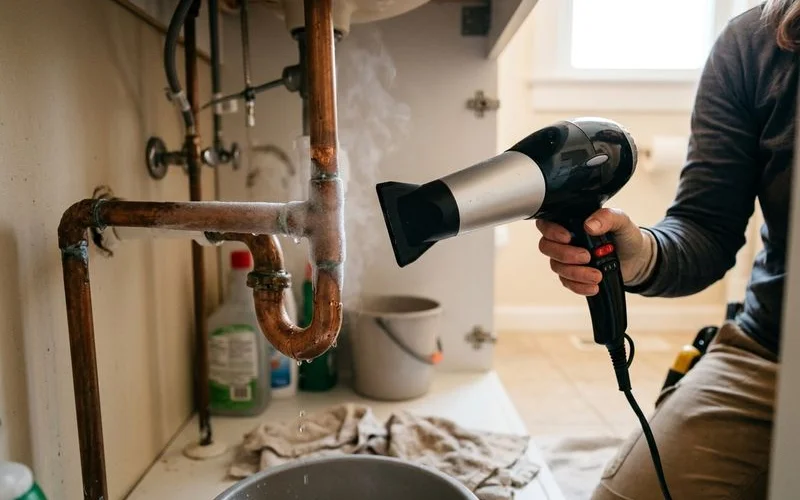
- You have the right tools. A standard 1875-watt hair dryer, an electric heating pad, or hot towels are all you need. You should never use a blowtorch, as 2024 National Fire Protection Association data shows that heating equipment and hot work are leading causes of severe residential structure fires.
- Only one or two fixtures are affected. If every faucet in your house is frozen dry, the main water line might be compromised.
How to Thaw Pipes Safely
We have a specific, proven method for thawing pipes that prevents unnecessary pressure buildup. If your situation meets the safety criteria above, this step-by-step approach works best.
Our top priority here is melting the solid ice without causing a sudden rupture. Follow this exact sequence to clear the line:
- Open the faucet first. Turn on both the hot and cold sides of the affected fixture. This simple step relieves pressure and gives the melting ice a clear place to drain.
- Locate the frozen section. Feel along the pipe for the coldest area or look for a thick layer of frost. The freeze is usually near an exterior wall, inside an unheated crawl space, or right at a sharp bend in the plumbing.
- Apply heat starting at the faucet. Work from the open tap back toward the frozen section. This allows water to flow out freely rather than building immense pressure behind the ice plug.
- Use gentle, even heat. A hair dryer on medium or high heat works perfectly for this task. You can place a standard aluminum cookie sheet behind the pipe to safely bounce the warm air back around to the hidden side.
- Be patient with the process. Depending on the severity of the freeze, thawing a solid block of ice can take 30 to 45 minutes. You should avoid rushing the process by using hazardous high-heat industrial tools.
- Monitor closely for leaks. As the ice melts, watch for any water escaping from places other than the open faucet. A tiny drip during the thawing phase often reveals a hairline fracture that was previously hidden by thick ice.
When You Should Call a Professional
Our team handles severe freeze emergencies every single winter. There are several critical situations where calling Two Bears Plumbing at (720) 740-2481 is the smartest choice you can make.
We strongly advise leaving the following complex scenarios to a trained expert. Handling these jobs without the right equipment usually leads to catastrophic water damage. To make the right choice quickly, review this basic comparison:
| Decision Factor | DIY Thawing | Professional Service |
|---|---|---|
| Pipe Location | Exposed in basement or cabinet | Hidden inside walls or concrete |
| Water Damage Risk | Low (no visible cracks) | High (visible bulging or splits) |
| Required Tools | Hair dryer, hot towels | FLIR cameras, electric thawing machines |
| Affected Area | Single fixture | Entire home or main water line |
The Pipe Is Inside a Wall or Ceiling
If the frozen pipe is tucked away inside a wall cavity, ceiling, or concrete slab, you cannot safely thaw it yourself. Applying a heat source to dry wall is highly ineffective and presents a serious fire hazard. Our plumbers utilize specialized FLIR thermal imaging cameras to pinpoint the exact location of the ice plug behind the drywall.
These cameras detect temperature differences as small as 0.10 degrees Celsius, allowing us to find the freeze without tearing your house apart. We then use professional-grade electrical resistance thawing machines to clear the blockage safely. This equipment sends a low-voltage current directly through the metal to melt the ice from the inside out.
You See Cracks, Bulges, or Splits
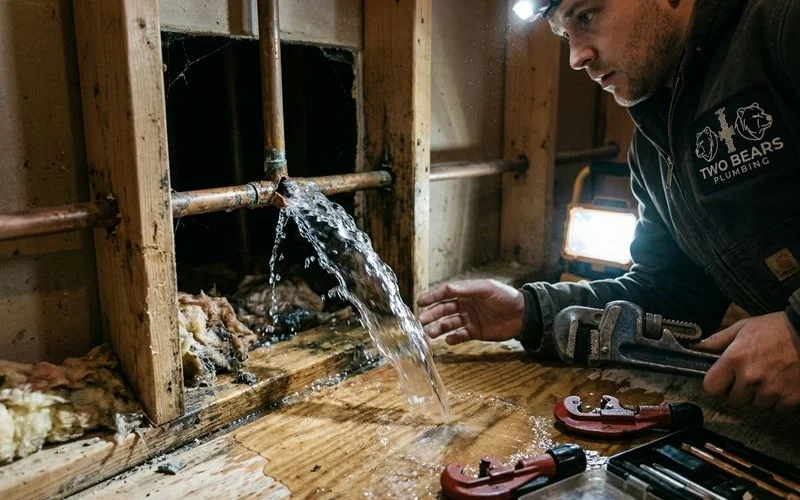
Any visible damage to the copper or PEX line means the pipe has likely already failed. Once that ice plug melts, water will immediately pour out into your living space. We know how fast a small fracture turns into a major flood.
According to recent public works data, a tiny 1/8-inch crack in a residential pipe can leak up to 250 gallons of water in a single day. Our emergency response involves shutting off the main supply immediately and replacing the compromised section before any thawing begins. This level of repair requires professional cutting, fitting, and soldering.
The Pipe Has Been Frozen for More Than 24 Hours
The longer a water line stays frozen, the more ice accumulates and the higher the risk of a severe structural burst. Extended freezes put immense pressure on plumbing joints and valves.
We frequently see these prolonged freezes point to larger home insulation failures. A professional evaluation helps determine exactly why that specific area failed so drastically.
Multiple Lines Are Frozen
Losing water pressure in multiple areas of your home usually means the freeze has reached the main supply line. Diagnosing a frozen water main requires commercial-grade diagnostic tools and a deep understanding of municipal water connections.
Our crew carries the heavy-duty equipment necessary to handle large-diameter pipe freezes. Tackling a frozen main line is simply beyond the scope of a standard DIY project.
You Are Not Comfortable Doing It
There is absolutely no shame in handing a tough job over to an expert. If you feel unsure about any step in the process, making a quick phone call is much safer than risking your property. We have seen too many well-intentioned DIY attempts end in ruined flooring and soaked drywall.
Considering the average home water damage claim exceeds $14,000 in the US, paying for a professional service call is a smart financial safety net.
What a Professional Thawing Service Includes
Our comprehensive approach ensures your plumbing system remains fully protected during the entire process. When you call Two Bears Plumbing for frozen pipe repair, here is exactly what to expect.
We follow a strict protocol to mitigate any potential water damage. Every service call includes these vital steps:
- Locate the freeze. Our technicians use advanced FLIR infrared thermal cameras to pinpoint hidden ice plugs behind walls. This non-invasive technology saves your drywall from unnecessary demolition.
- Assess for damage. We thoroughly inspect the exposed line for stress marks, bulging, or hairline fractures before applying any heat. Catching a compromised joint early prevents an unexpected flood.
- Thaw safely. Our team deploys commercial Hot-Shot electric pipe thawing equipment to heat the metal evenly. This specialized machinery operates at a high current but low voltage for maximum safety.
- Repair any damage. We immediately cut out and replace any burst sections using premium copper or PEX materials. Restoring your water pressure safely is the top priority.
- Identify the root cause. Our plumbers analyze the surrounding environment to figure out why the freeze happened in the first place. You receive specific recommendations for upgrading insulation, adding Frost King foam sleeves, or rerouting vulnerable lines.
Prevention Is Always Cheaper Than Repair
Our experts cannot stress enough how important it is to be proactive before the next cold snap hits. Taking an hour to prepare your home now saves you thousands of dollars later.
We highly suggest installing thermostatically controlled heat tape that automatically kicks on when ambient temperatures drop to 38 degrees Fahrenheit. A few simple hardware store upgrades make a massive difference. Whether you safely thaw the line yourself or have us handle it, this stressful experience should motivate you to upgrade your winter defenses.
These free online resources will help you protect your property:
- Prepare for winter: Our detailed guide on winterizing your plumbing covers the critical steps you need to take before December arrives.
- Spot the warnings: Catching the earliest warning signals is much easier after reading up on the signs of frozen pipes.
- Understand the expenses: We outline the exact financial breakdown in our frozen pipe repair cost guide.
Professional dispatchers are ready to send help right now if you are in over your head. Call Two Bears Plumbing directly at (720) 740-2481.
We serve Aurora, Centennial, Parker, and the surrounding Front Range communities with rapid, reliable emergency plumbing service when extreme winter weather strikes. Keep your home safe and warm this season.
Need Plumbing Help in Aurora?
Call now for same-day service. Upfront pricing, no hidden fees.
Call (720) 740-2481Related Service: Learn more about our frozen pipe repair →