Trenchless vs Traditional Sewer Repair: Which Is Better?
Trenchless sewer repair saves your yard, but is it always the right choice? Compare costs, timelines, and durability for Aurora homeowners.

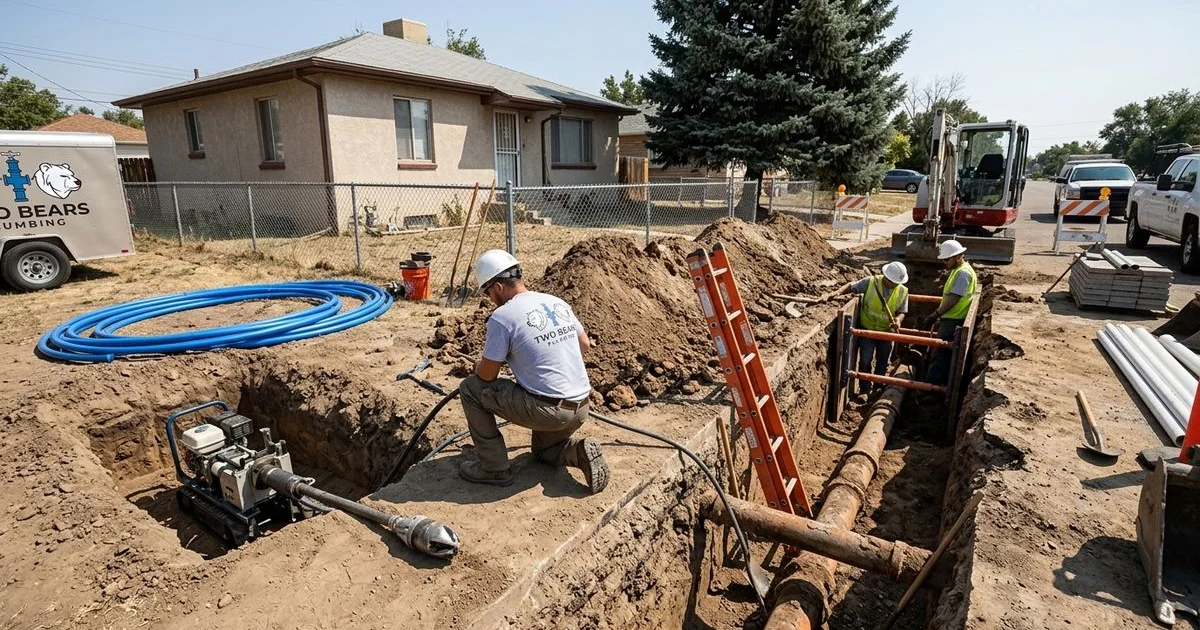
We see the frustration on homeowners’ faces when a simple plumbing fix turns into a massive yard excavation. Unplanned digging wrecks budgets and destroys mature landscaping overnight.
This decision between trenchless and traditional sewer repair represents the largest plumbing expense most people face.
Our team evaluates hundreds of these specific scenarios across Aurora every year. The correct approach relies entirely on the structural condition of your existing pipes and your financial constraints. Let’s look at the data, see what it actually tells us, and explore a few practical ways to respond to a failing line.
What Is Traditional Sewer Repair?
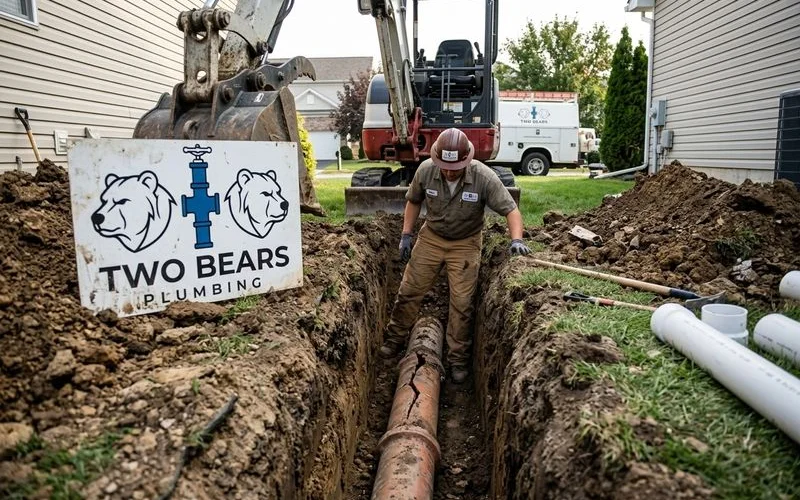
Traditional sewer repair requires digging a trench along the entire path of the line to remove the old pipe and lay a new one. Heavy equipment operators excavate the soil to expose the damaged section. Our crews still rely on this proven method for specific structural failures.
The process involves several specific steps:
- Locate and mark the exact sewer line path.
- Excavate a trench along the full length of the damaged section.
- Remove the broken pipe completely.
- Install new PVC or ABS pipe at the proper grade.
- Backfill the trench and restore the surface.
While the new PVC materials only cost around $80 to $400 for 50 linear feet, the intense labor drives the final bill. Traditional dig-and-replace projects typically run $5,000 to $15,000 total. You must also account for yard restoration costs. Sod replacement, concrete repair, and driveway paving often add an extra $2,000 to $5,000 to the total expense.
Typical timeline: 2 to 5 days, depending on the length and depth of the line.
What Is Trenchless Sewer Repair?
Trenchless repair replaces or rehabilitates underground plumbing with minimal digging. Contractors complete this work in just one or two days, saving thousands on landscaping repair. We use two primary methods to accomplish this goal without tearing up your lawn.
Pipe Lining (CIPP)
Cured-in-Place Pipe (CIPP) lining inserts a flexible, resin-coated tube into the existing structure. The technician inflates the liner, allowing the epoxy resin to harden against the old walls. Our specialists prefer this method because it creates a smooth, jointless pipe inside the old one.
This new epoxy surface completely blocks tree roots and resists corrosion. CIPP lining usually requires only a single cleanout access point, keeping yard disruption incredibly low. You can expect to pay $135 to $250 per linear foot for this application. The method works beautifully when the original pipe remains structurally intact but suffers from minor cracks or leaks.
Pipe Bursting
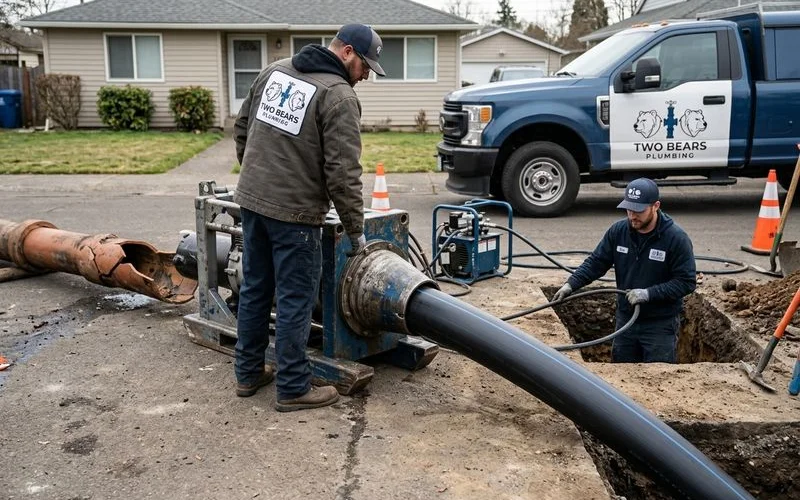
Pipe bursting pulls a heavy bursting head through the old line, fracturing the original material into the surrounding soil. The machine simultaneously pulls a brand-new high-density polyethylene (HDPE) pipe into place behind it. We rely on this technique to replace severely degraded lines entirely.
HDPE pipe lasts 50 to 100 years and completely eliminates the mortar joints that plague older clay systems. This process requires two small access pits, one for insertion and one for the pulling winch. The costs run slightly higher, typically $150 to $300 per foot, but the technique allows you to upsize the pipe diameter.
Head-to-Head Comparison
| Factor | Traditional | Trenchless |
|---|---|---|
| Total Cost | $5,000 - $15,000+ | $3,500 - $10,000 |
| Timeline | 2 - 5 days | 1 - 2 days |
| Yard disruption | Major (full trench) | Minimal (1-2 access pits) |
| Restoration costs | Often $2,000 - $5,000+ | Minimal or none |
| Pipe lifespan | 50+ years (PVC) | 50-100 years (CIPP or HDPE) |
| Works on collapsed pipe | Yes | Pipe bursting yes, lining no |
| Works with bellied pipe | Yes | No (must be excavated) |
| Can upsize pipe | Yes | Pipe bursting yes, lining no |
When Trenchless Is the Better Choice
Protecting Established Landscaping
Mature lawns, custom garden beds, and paved driveways present a massive financial risk during excavation. Trenchless applications save you the headache of restoring all that hardscape. Our clients often find that avoiding a $3,000 driveway replacement makes trenchless the cheaper total option.
Accommodating Shorter Timelines
Trenchless repair wraps up quickly, usually in a single day. Minimizing disruption to your daily routine provides a massive advantage for busy households. We finish the job before you even have to think about hotel accommodations or extended water shutoffs.
Fixing Joint Issues in Good Pipes
Homes built before 1975 likely have vitrified clay pipes, which start failing around the 50-year mark. If your pipe remains structurally sound but leaks at the joints, CIPP lining seals the entire system. This is particularly relevant for Aurora properties with 1970s clay sewer lines where the pipe body holds up but the mortar joints crumble. The seamless epoxy creates an impenetrable barrier against root intrusion.
Bypassing Hardscape and Structures
Sewer lines frequently run straight under sidewalks, custom patios, or garage slabs. Traditional repair forces contractors to cut through and demolish that expensive concrete. We use pipe bursting or lining to slide right under these structures without leaving a scratch.
When Traditional Is the Better Choice
There are distinct situations where a trenchless approach simply fails to solve the problem.
Severe Structural Collapse
Crushed pipes or sections with missing material cannot host a flexible liner. Pipe bursting handles minor misalignments, but extreme structural failure stops the bursting head. Our heavy equipment operators must step in to physically remove the destroyed sections.
Sagging or Bellied Pipes
Expansive clay soil in the Denver metro area frequently shifts, causing underground pipes to sink. This creates a low spot, or belly, that collects waste and grease until a total blockage occurs. We have to excavate bellied pipes because trenchless liners just follow the existing incorrect slope. The crew must manually reinstall the pipe at the proper grade with supportive backfill.
Upgrading Small Diameter Lines
Some historic Aurora properties still operate on tight 3-inch sewer laterals. Traditional replacement offers the most reliable way to upgrade to a modern 4-inch system.
- Pipe bursting can upsize by one diameter, but starting at 3 inches limits your equipment options.
- Digging allows for a perfect, unrestricted installation.
- The open trench guarantees perfect slope calculations.
Our team carefully measures the required flow capacity before recommending an excavation upgrade.
Significant Offset Joints and Open Yards
When ground movement shifts pipe sections violently, the resulting offsets block trenchless tools. Traditional digging lets the plumber address each specific offset manually. If the pipe runs through an empty dirt lot, traditional labor costs drop significantly. We often recommend a simple dig-and-replace for open yards because the straightforward plumbing work costs less without hardscape in the way.
What We Recommend for Aurora Homes
Two Bears Plumbing provides honest, data-backed guidance without pushing a single specific agenda. A successful repair starts with a high-definition sewer camera inspection to locate the exact problem areas. Our plumbers present your options with upfront pricing based on the visual evidence.
The camera feed specifically reveals the following structural details:
- Cracks and fractures in aging clay pipes
- Root intrusion at failing mortar joints
- Misaligned or offset connections
- Bellies holding stagnant water
For many local properties fighting aging infrastructure, pipe bursting provides a permanent fix. It delivers a high-density polyethylene pipe rated for 50 to 100 years of service. We suggest this option because the minimal yard destruction keeps the total project cost highly competitive.
When inspections reveal severe sagging or total collapse, traditional excavation remains the safest path forward. The crew ensures the new installation features correct grading and heavy soil compaction to stop future settling. Our priority always centers on a permanent, reliable drainage solution.
The Cost Factor
Trenchless labor runs 30% to 50% lower than traditional digging labor, which easily offsets the specialized material costs. For a detailed breakdown of local pricing, read the complete sewer line replacement cost guide. We update those figures regularly to reflect current market conditions.
The average trenchless project in the Aurora area falls between $3,500 and $10,000. Factors like line depth, soil type, and concrete removal drastically shift the final number. Our estimators calculate every variable before presenting a firm price.
Schedule Your Sewer Inspection
Uncertainty causes the most stress during a plumbing emergency. You need clear facts about your specific underground situation before spending thousands of dollars. We eliminate the guesswork with advanced diagnostic equipment.
Start your process with a comprehensive camera inspection. Call Two Bears Plumbing at (720) 740-2481 or visit the sewer line repair page to schedule a visit. Our technicians provide honest assessments, transparent options, and zero pressure. You receive straightforward answers from local professionals who understand Aurora’s soil and infrastructure challenges.
Need Plumbing Help in Aurora?
Call now for same-day service. Upfront pricing, no hidden fees.
Call (720) 740-2481Related Service: Learn more about our sewer line repair replacement →