Water Heater Replacement Cost in Aurora, CO (2026 Guide)
How much does it cost to replace a water heater in Aurora? Typical prices for tank and tankless installation with upfront flat-rate pricing.

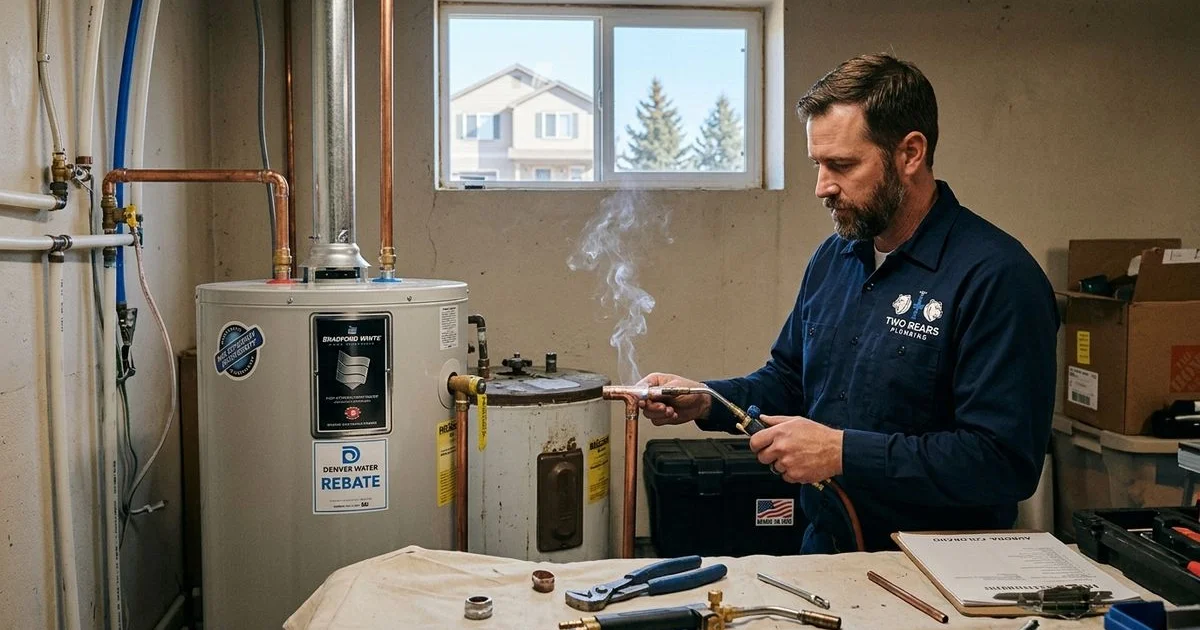
You likely know the feeling of dread that hits when the shower suddenly runs cold. We started Two Bears Plumbing with a simple goal: be the plumber Aurora homeowners can trust when things go wrong. Knowing your budget matters deeply to the process.
A failing hot water system forces quick choices.
Our crew sees this panic daily across the city. The local pricing data reveals some interesting trends for 2026. A simple tank swap looks very different on paper than a full efficiency upgrade.
We will break down the exact costs you can expect to pay this year. The data tells a clear story about the smartest options. Let’s look at the facts and outline practical ways to respond.
Average Water Heater Replacement Costs in Aurora
Most Aurora homeowners pay between $1,200 and $2,500 installed for a standard 50-gallon tank water heater. This baseline figure covers the unit itself, local labor rates, and hauling away the old tank. We also factor in the mandatory permit fees, which the City of Aurora currently sets at a $95 base charge for residential replacements. A basic swap keeps expenses lower.
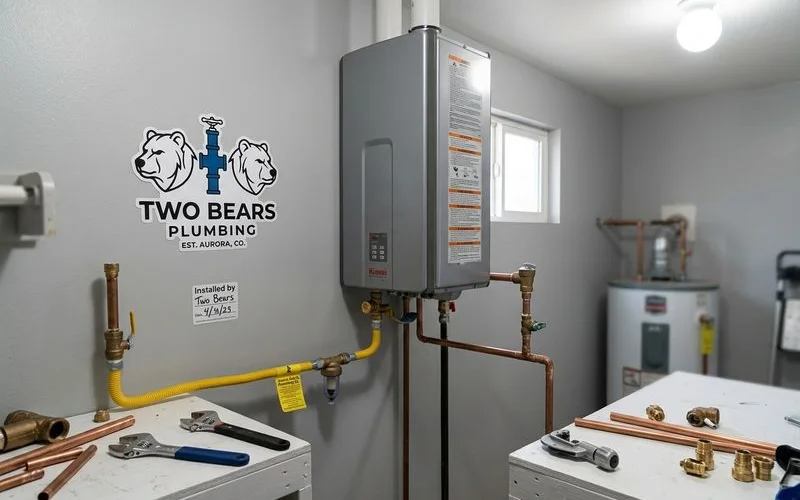
Upgrading to a tankless, on-demand system changes the financial picture. We see these modern installations ranging from $3,000 to $5,500. The final tally depends heavily on the brand chosen, such as a high-output Navien or Rheem unit. Upgrades often require new gas lines or venting modifications to meet current safety standards.
Here is a quick breakdown of typical installed prices for 2026:
| Type | Price Range (Installed) |
|---|---|
| 40-gallon tank (gas) | $1,100 to $2,000 |
| 50-gallon tank (gas) | $1,200 to $2,500 |
| 50-gallon tank (electric) | $1,000 to $2,200 |
| Heat pump (hybrid electric) | $2,500 to $4,500 |
| Tankless (gas) | $3,000 to $5,500 |
| Tankless (electric) | $2,000 to $3,800 |
These represent real figures seen daily in the Denver metro area. Our pricing reflects this specific local market rather than generic national averages. A true quote accounts for regional material costs and local code compliance.
What Affects Your Final Price
Several variables can push your replacement bill up or down. We always evaluate the entire plumbing ecosystem before giving a quote. The exact configuration of your home dictates the required labor and materials.
Unit Size, Type, and Rebates
A family of four usually requires a 50-gallon or 75-gallon tank to avoid running out of hot water. We frequently install high-output tankless units for households with multiple teenagers. Buying a bigger unit costs more upfront. Sizing the system too small guarantees cold showers, defeating the purpose of the upgrade.
Financial incentives change the math considerably. Our customers often take advantage of the $750 Xcel Energy rebate available for high-efficiency heat pump water heaters in 2026. This utility rebate significantly offsets the initial purchase price of hybrid models.
Infrastructure and Conversions
Switching from electric to gas, or the reverse, involves running new utility lines. We regularly upgrade electrical panels to accommodate 240-volt hybrid systems. This extra infrastructure work typically adds $500 to $1,500 to the total project.
Your unit’s physical location heavily influences the labor charge. We find that tight crawl spaces or cramped utility closets demand extra hours to safely maneuver heavy tanks. Most homes in the area keep the heater in an open basement or garage, keeping the labor straightforward.
Mandatory Safety Codes
Local building codes dictate specific safety features for new installations. We strictly follow the Colorado Plumbing Code to protect your property. Older setups almost always require safety updates during a replacement.
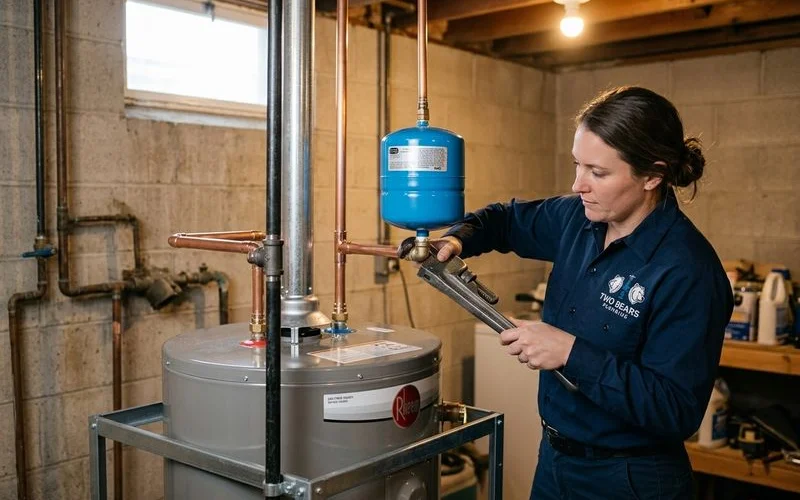
Required safety additions often include earthquake straps, a proper drip pan, and updated venting. A crucial requirement in our area is a thermal expansion tank, which absorbs excess pressure caused by heated water. These components act as vital safeguards rather than optional upsells.
Tank vs Tankless: Which Makes Sense for Aurora Homes?
Both heating methods work well in the Colorado climate. We help clients weigh the specific trade-offs based on their daily routines. Choosing the right system depends entirely on your long-term goals.
The Traditional Tank Method
Standard tank water heaters remain the workhorses of the industry. We install these models because they are reliable, affordable, and mechanically simple. A quality unit from a trusted brand like Bradford White easily handles daily demands.
The major drawback is standby heat loss. You pay to keep 50 gallons of water piping hot around the clock. A standard tank typically lasts 8 to 12 years before the metal vessel begins to fail.
The Tankless Advantage
Tankless units heat water strictly on demand, eliminating standby energy waste. Our technicians favor these space-saving systems for long-term efficiency. They often last 15 to 20 years with proper maintenance.
The catch is the significantly higher initial investment. We often need to upgrade gas meters to handle the sudden, massive BTU draw required to flash-heat freezing winter water. Households running three showers simultaneously might even require two distinct units.
Comparing Your Options
Here is a quick comparison of the three main technologies available today:
| Feature | Standard Tank | Tankless | Heat Pump (Hybrid) |
|---|---|---|---|
| Upfront Cost | Lowest | Highest | Medium |
| Energy Efficiency | Fair | Excellent | Best |
| Space Required | Large | Minimal | Large |
| Average Lifespan | 8 to 12 Years | 15 to 20 Years | 10 to 15 Years |
High-efficiency tank models still represent the best value for most families. We strongly recommend tankless or hybrid units for residents planning to stay in their homes for over a decade. The long-term energy savings eventually pay back the premium installation cost.
Aurora’s Hard Water and Your Water Heater
Many residents fail to realize how severely local water conditions impact plumbing infrastructure. We see destroyed heating elements constantly due to massive mineral deposits. The municipal water supply carries an extreme hardness level measuring between 11.2 and 12.8 Grains Per Gallon (GPG).
This dissolved calcium acts like liquid rock flowing through your pipes. Our repair teams find that this scale drops a system’s heating efficiency by up to 29 percent. The mineral buildup forces the burner to work dramatically harder, leading to premature tank failure.
You can fight back against hard water damage using a few proven strategies:
- Install a whole-home water softener to remove calcium.
- Inspect the sacrificial anode rod every two to three years.
- Set the thermostat to 120 degrees to slow scale formation.
Sediment removal remains your best defense against scale. We strongly recommend flushing your water heater annually to physically expel these rock deposits. This single chore effectively adds years to the unit and keeps monthly utility bills low.
Why Upfront Pricing Matters
Nobody likes receiving a shock at the end of a service call. We provide flat-rate pricing before a single wrench turns. The number on the initial quote matches the final invoice exactly.
Some contractors quote a low base price, only to tack on disposal fees and truck charges later. Our straightforward approach protects you from these predatory practices. Homeowners routinely save hundreds of dollars by avoiding open-ended hourly labor rates.
“A reliable quote accounts for all materials, permits, labor, and old tank disposal upfront.”
Unexpected plumbing failures rarely happen at convenient times. We offer flexible financing options for these major installations. A sudden breakdown should never force a family to drain their emergency savings account.
When to Replace vs Repair
Not every mechanical issue requires an entirely new appliance. We evaluate the age and condition of the tank before making a recommendation. A simple repair makes sense for units under eight years old experiencing minor faults.
Swapping out a faulty thermostat, a broken heating element, or a stuck pressure relief valve costs a fraction of a full replacement. Our crews apply the industry standard fifty-percent rule. If a repair costs more than half the price of a new installation, replacing the unit becomes the wiser financial move.
Watch for these undeniable signs that your system is failing permanently:
- Puddles of water forming around the base of the tank.
- Rusty, discolored water flowing from your hot faucets.
- Loud popping or banging noises from severe scale buildup.
- The unit has passed its twelfth birthday.
An aging tank losing efficiency drains your wallet through high energy bills. Check out our water heater services page for an exact breakdown of the repair work available. Give our office a call at (720) 740-2481 to schedule a thorough diagnostic visit.
We proudly serve Centennial, Parker, and all surrounding communities. Finding the most reliable solution for your household is the top priority.
Get Your Free Water Heater Estimate
Living without hot water disrupts your entire day. We stand ready to restore your home’s comfort quickly and professionally.
Call Two Bears Plumbing at (720) 740-2481 today.
You can also visit our contact page to schedule a free, no-obligation estimate. Our team will assess your current setup and recommend the right unit. A transparent, upfront price gives you total peace of mind.
Need Plumbing Help in Aurora?
Call now for same-day service. Upfront pricing, no hidden fees.
Call (720) 740-2481Related Service: Learn more about our water heater services →